PAW Patrol Academy NETFLIX
- 4.2
- Rating
- 500.00K
- Installs
- Free
- Price

 Analysis by App-foxy
When I first opened PAW Patrol Academy, I understood its appeal immediately: it is a children’s educational game built around short activities rather than long lessons. The idea is simple and inviting. A child can enter, try a mini game, make a few choices, and move on without feeling as if they have been given homework. That makes it a natural fit for a quiet moment at home, a short trip, or a parent looking for something more purposeful than an ordinary cartoon video.
The game comes from Netflix, Inc. and is free to play. It is rated for Everyone, which matches its child-friendly positioning, and it runs on Android devices using version 8.0 or later. Its current release is version 1.0, so I approached it as a straightforward starting experience rather than a large, mature learning platform with years of accumulated content.
What matters most here is the balance between familiarity and learning. The PAW Patrol setting gives young children an easy way into the activities, while the mini-game format keeps the experience approachable. I would recommend it most strongly to families with children who respond well to recognizable characters and quick tasks. I would be more cautious if you are looking for a detailed curriculum, advanced progress reporting, or a game designed to challenge older children.
You May Also Like

 Blood Strike: 2.5 Anniversary
Blood Strike’s Loadouts Turn Every Drop Into a Tactical Gamble
A close look at Blood Strike’s custom loadouts: how fast access to signature weapons reshapes its battle royale rhythm, rewards preparation, and narrows the gap between fights.

 Pandora - Music & Podcasts
Pandora’s Music Is Easy to Start, but Harder to Recover
Pandora’s strength is its low-effort path from a seed to a station. Its weak spot is how much confidence it asks you to place in connection, setup, and quiet recovery.

 8 Ball Pool
 Is Built on Rivalries, Rematches, and Routine
A close look at the rivalries, rematches, shared routines, and unanswered safety questions that turn a quick pool match into a persistent mobile community.

 Samsung Music
’s Quiet Strength Is Playing What You Already Own
Its reach comes less from spectacle than from dependable access to a personal library. That simplicity is both the app’s strongest retention engine and its ceiling.

 AccuWeather: Weather Radar
AccuWeather Review: A Quick, Clear Forecast for Everyday Decisions
For everyday plans, the best forecast is the one you can understand quickly. AccuWeather makes rain timing, radar, and local conditions easy to act on, with a few trade-offs.

 Hill Climb Racing
Why Hill Climb Racing Still Turns Crashes Into One More Run
A tiny car, a bumpy hill and one more upgrade: Hill Climb Racing keeps resurfacing because its simple chaos makes every near-miss feel personal.
More From Our News Desk



What the first session feels like
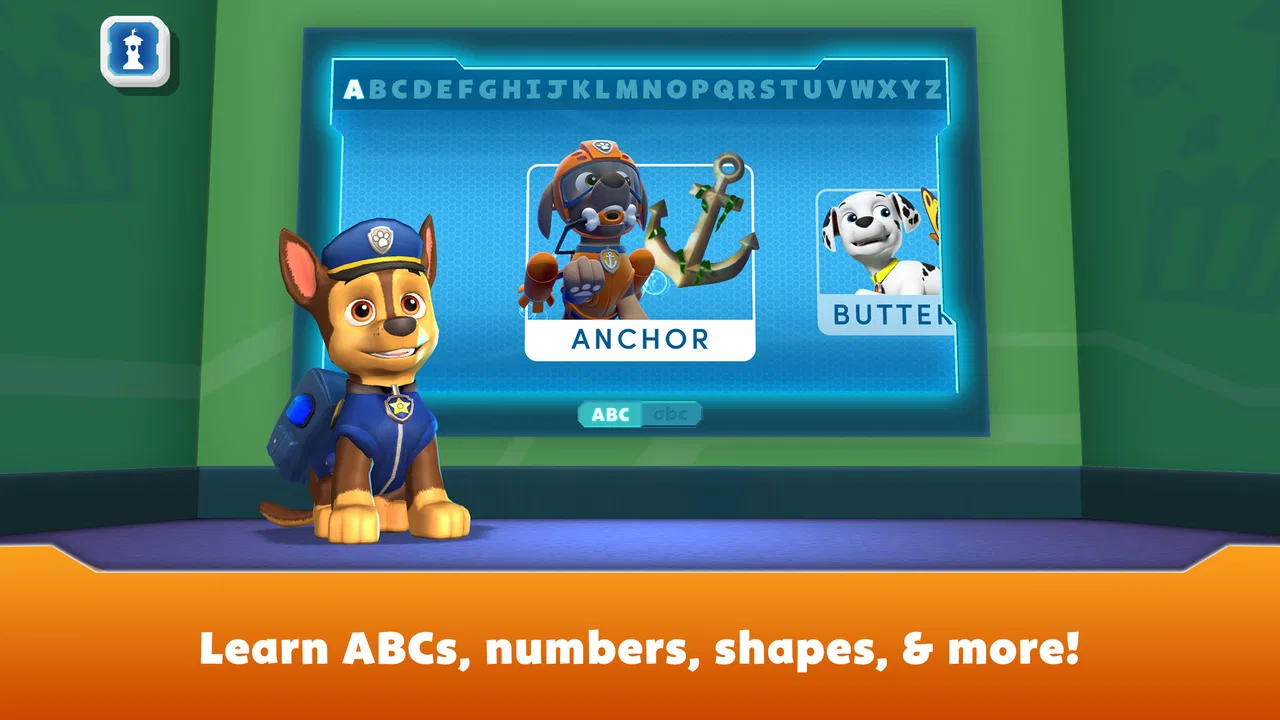
The opening experience is best understood as an academy made up of small play opportunities. Instead of asking a child to sit through a long explanation, it encourages exploration through individual activities. This is useful for first-time players because the learning goal can stay in the background while the child concentrates on the immediate task.
I found that the PAW Patrol theme does important practical work. A child who might resist a conventional educational app may be more willing to investigate an activity when it is presented through familiar rescue-team characters. That does not automatically make every task educationally deep, but it lowers the barrier to starting. In a family setting, that first willingness to try is often more valuable than a complicated menu of lessons.
The game is also easier to introduce than an app that expects a parent to explain a complete system. I would begin by sitting beside the child for the first few minutes, not because the concept is difficult, but because a young player benefits from seeing how the academy is organized. After that, I would let the child take the lead and watch which activities hold attention naturally.
One useful way to use it is as a transition activity. For example, after returning from school, a child could spend a short period exploring a mini game before starting another routine. The app can provide a gentler change of pace than a fast entertainment game, while still feeling like play. I would not use it as a substitute for reading, handwriting practice, conversation, or hands-on learning, but it can sit comfortably alongside those activities.
The public response is reasonably positive without suggesting universal approval: the game has an average rating of 3.9 from around 700 ratings, with over 100 thousand installs. I read that as a sign of genuine interest, but not as a reason to assume it will suit every child. With children’s apps especially, personal engagement matters more than a rating because age, patience, and familiarity with the characters can change the experience considerably.
Getting started without making setup feel like a chore
Because this is a Netflix game, the first thing I would do is check that the intended device meets the Android requirement and that the child has a comfortable way to interact with the screen. A larger tablet is usually easier for small hands than a compact phone, particularly when a mini game asks for taps in different areas. The game is free, so the initial decision is less about purchase risk and more about whether the device and household routine are a good match.
I would also prepare the session before handing over the device. Lowering distractions, choosing a quiet place, and making sure the child is not already tired can make a noticeable difference. A child who is frustrated or overstimulated may blame the game for a problem that is really about timing. Short educational activities work best when the player has enough attention to notice instructions and respond deliberately.
For a first visit, I would avoid trying to inspect every available activity immediately. Let the child see the main area, choose something that looks appealing, and complete that one task. This creates a clearer first success than rapidly opening and closing several mini games. It also gives you a chance to learn how much guidance the child actually needs.
Parents often wonder whether they need to play continuously beside the child. In my experience, a brief introduction is the sensible middle ground. Stay close for the first activity, help only when the child is genuinely stuck, and then step back. If you solve every action for them, the app becomes a performance for the adult rather than a small independent learning experience for the child.
Another practical tip is to agree on the session’s stopping point before play begins. Since mini games can feel easy to continue, a child may become upset when the device is removed without warning. Saying “we will finish this activity and then stop” gives the child a concrete ending. This is not a feature of the game itself, but it is one of the simplest ways to make it work better in a real household.
The first meaningful success
The first worthwhile achievement is not merely opening the academy. It is completing one activity with the child making the important decisions. I would encourage a new player to listen or look carefully, try an answer, and continue after a mistake rather than immediately asking for the correct move. The educational value is strongest when the child has a chance to connect an action with an outcome.
If the child succeeds quickly, resist the temptation to turn the moment into a test. A calm response such as “you noticed what to do” reinforces attention and problem-solving without making the game feel like an exam. If the child gets something wrong, I would offer a small hint instead of taking the device. The goal is to preserve ownership of the action.
This approach reveals one of the game’s practical strengths: it can give a young player a manageable sense of independence. The activities are small enough that a child can understand the immediate goal, yet themed enough to feel like part of a larger world. That combination is more inviting than a worksheet for children who need imagination to stay engaged.
There is also a useful trade-off here. Short mini games make success feel reachable, but they may not provide enough repetition for a child who needs extended practice with one concept. If your child enjoys quick variety, that is a benefit. If your child needs a carefully sequenced lesson with repeated examples, a dedicated early-learning app or an adult-led activity may be more effective.
For an everyday example, imagine a child waiting while a parent finishes preparing dinner. I would choose one activity, sit nearby at the beginning, and ask the child to explain what they are trying to do. After the first successful completion, the child can either try another activity or stop on a positive note. That use keeps the game contained and turns screen time into a small moment of conversation rather than silent consumption.
Where new players may hesitate
The most common confusion is likely to come from treating the academy like a conventional game with a single campaign. Its mini-game structure is better approached as a collection of short learning moments. A child may move between activities rather than follow one long story, and that is not necessarily a sign that anything is missing. The point is flexibility, not a lengthy adventure route.
Some children may also expect every familiar PAW Patrol character to behave exactly as they do in the television series. I would set expectations gently: the characters provide context and motivation, while the actual focus is the activity. If a child is looking only for action scenes or a full cartoon episode, the educational format may feel slower or less exciting than expected.
Another possible source of friction is adult interpretation. Parents may want to know precisely what a child has learned after each session, but a playful mini-game experience is not the same as a formal assessment. I would judge progress by what the child can explain, repeat, or attempt independently rather than by assuming that finishing an activity proves mastery.
The age rating of Everyone makes the game broadly accessible, but that does not mean every child will find the same level of challenge. A younger child may need help understanding the task, while an older child who already handles similar activities may lose interest quickly. The best fit is likely a child who enjoys the characters and benefits from simple, guided interaction.
I would also avoid presenting the game as a replacement for an educator. Its strongest role is practice through play and a friendly introduction to learning activities. A teacher, parent, book, puzzle, or physical game can offer forms of feedback and creativity that a screen cannot. The best routine alternates between these options instead of relying on one app for everything.
How it compares with familiar alternatives
Compared with a standard video, PAW Patrol Academy asks the child to participate. That is a meaningful advantage because the player must respond rather than simply watch. Compared with a traditional puzzle book, it is more immediately attractive to children who enjoy animated characters, although a paper activity can encourage drawing, writing, and slower concentration in ways a screen-based game does not.
Compared with broad educational platforms, this game feels more focused on approachability than on a complete learning program. A larger learning service may offer clearer subject paths, more detailed practice, or stronger tools for adults who want to track progress. This title is the better choice when the priority is getting a young PAW Patrol fan to begin an activity without resistance.
Compared with action-oriented children’s games, it has a more constructive purpose. That does not make it automatically superior: an action game may offer deeper challenge or more sustained excitement, while this one is likely to work best in short sessions. I would choose it when I want recognizable characters combined with educational play, not when I want a complex game system that will occupy an older child for hours.
One non-obvious advantage is how easily it can become a conversation starter. After an activity, ask the child why they chose an answer or what they noticed first. This turns a private screen interaction into a shared reasoning exercise. The same technique is less natural with passive video, where the adult may have fewer moments to ask the child to make a decision.
Who should try it, and who should look elsewhere
I think the game is a good starting point for a young child who likes PAW Patrol, enjoys tapping through short activities, and needs encouragement to approach educational content. It is also suitable for parents who want a free option that can fill a brief, supervised window without requiring a complicated lesson plan.
I would skip it if your child dislikes the franchise, becomes frustrated by touch controls, or is already looking for advanced academic challenges. I would also choose another option if your main requirement is detailed parent reporting, a strict subject curriculum, or substantial offline hands-on work. Those needs call for a more specialized learning tool or a physical activity set.
The developer and the Netflix connection may make the game feel familiar to families already using Netflix, but the important question is still whether the child enjoys the format. Familiar branding can encourage the first launch; it cannot guarantee continued interest. I would give the child a few calm sessions to decide, rather than judging the game after a rushed first attempt.
Since the game is free and has an Everyone rating, it is relatively easy to test as part of a family routine. I would still keep the decision practical: use a suitable screen, stay nearby at first, and observe whether the child is thinking through activities or simply tapping rapidly to move on. That distinction tells you more about its value for your child than the title alone.
My recommendation after using it
The best way to use PAW Patrol Academy is as a short, guided learning break—not as a complete education plan. Start with one activity, let the child perform the key actions, and follow success with a simple question about what happened. That routine gives the game a clear purpose and helps you see whether it is encouraging attention, choice-making, and persistence.
I like the approachable design idea behind it. The PAW Patrol world gives children a familiar doorway, while the mini-game structure makes the first step less intimidating. The free price also makes experimentation easy, and the broad age rating means it can be considered by many families with younger players.
My reservations are equally straightforward. Children who need deeper progression may outgrow the format, and parents expecting formal educational measurement may find it too light. The game’s value depends heavily on matching the child to the experience and on an adult using it thoughtfully rather than leaving it to carry the entire learning routine.
Overall, I would recommend giving it a try if your child already enjoys PAW Patrol and you want an inviting first move into educational play. Install it on a compatible device, begin beside the child, aim for one completed activity, and stop while the experience still feels positive. That small, successful beginning is where this game makes its strongest impression.
FAQs for PAW Patrol Academy NETFLIX
01What is PAW Patrol Academy NETFLIX and how does it work?
PAW Patrol Academy NETFLIX is an educational gaming app designed for young children, featuring characters from the popular PAW Patrol series. It offers a variety of interactive lessons and activities that help develop problem-solving skills and creativity. Available exclusively to Netflix members, the app provides a safe, ad-free environment for kids to learn and play.
02Is PAW Patrol Academy NETFLIX safe for children to use?
Yes, PAW Patrol Academy NETFLIX is designed with child safety in mind. It is ad-free and does not contain in-app purchases, ensuring a distraction-free experience. The content is age-appropriate, focusing on educational and developmental activities, making it a safe choice for young users.
03Do I need a Netflix subscription to access PAW Patrol Academy NETFLIX?
Yes, a Netflix subscription is required to access PAW Patrol Academy NETFLIX. The app is part of Netflix's exclusive offering and can be downloaded directly through the Netflix app on compatible devices. Ensure your subscription is active to enjoy all available features.
04What age group is PAW Patrol Academy NETFLIX suitable for?
PAW Patrol Academy NETFLIX is primarily designed for children aged 3 to 7 years old. The app features age-appropriate educational content that helps develop early learning skills such as problem-solving, creativity, and basic literacy, making it ideal for preschool and early elementary school children.
05Can PAW Patrol Academy NETFLIX be used offline?
Yes, certain features and activities of PAW Patrol Academy NETFLIX can be accessed offline once they have been downloaded. This allows children to enjoy the app and continue learning even without an internet connection. However, initial setup and downloads require an internet connection.
Pros
- Engaging and educational gameplay.
- Colorful and vibrant graphics.
- Friendly and familiar characters.
- No ads for uninterrupted play.
- Easy controls for young children.
Cons
- Limited levels can feel repetitive.
- Requires a Netflix subscription.
- No offline mode available.
- Lacks multiplayer options.
- In-app content could be expanded.

PAW Patrol Academy NETFLIX
Gallery